
TestLogger Launches a Damper Position Sensor for Collector
TestLogger has announced a 12.7 mm linear potentiometer that logs damper position on its Collector units, with damper histograms in Analyzer and degradation reports in Manager. It costs €40 (VAT 0%) and is available now.

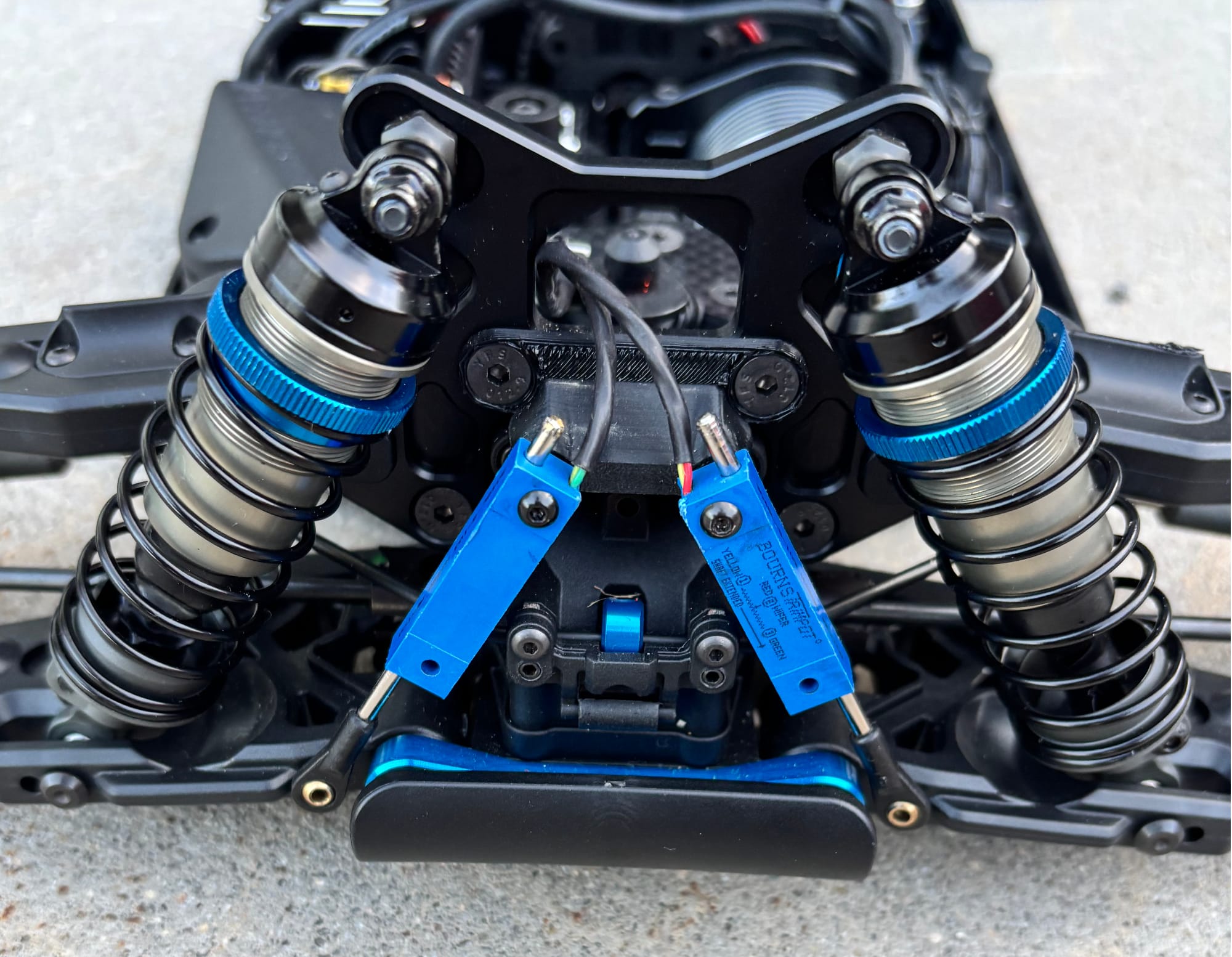
If you race a 1/8 nitro buggy, you already spend a lot of time on your shocks: oil, pistons, springs, rebuilds. What's harder to see is what those dampers are actually doing out on the track. TestLogger has just announced a sensor aimed at that question: a damper position sensor for its Collector data logging platform.
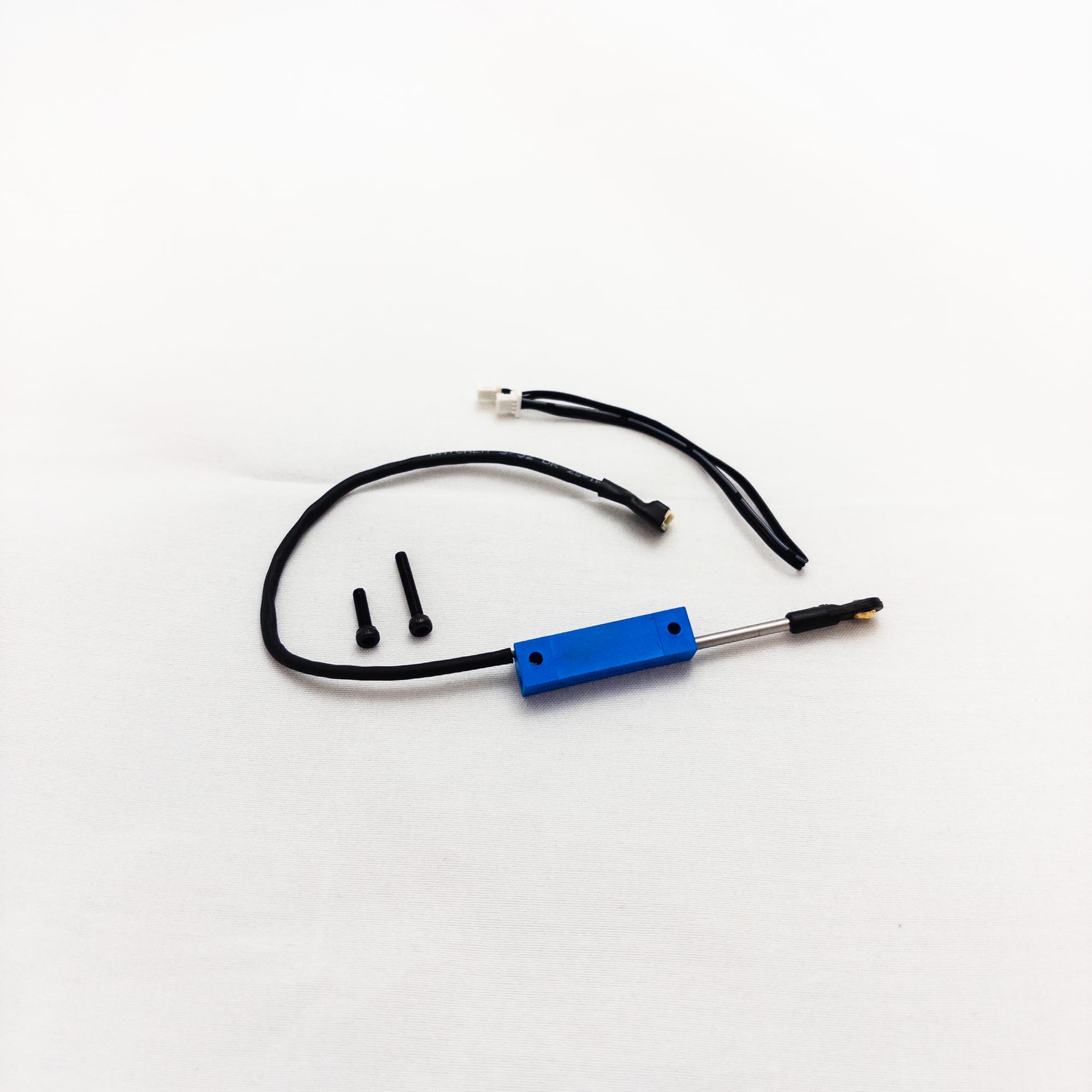
What it is
TestLogger's press release, dated October 24, 2026, calls the new part a lightweight linear potentiometer that measures damper position. It has 12.7 mm of travel, and TestLogger says that makes it a good fit for 1/10 off-road and 1/8 scale cars.
This sensor comes after TestLogger's August launch of Collector Mini v1.1 and Collector Midi. Those units added analog inputs, which TestLogger described as the first step toward supporting new sensors. The damper position sensor is one of those new sensors.
Specifications
| Parameter | Value |
|---|---|
| Sensor type | Linear potentiometer |
| Input type | Analog |
| Travel | 12.7 mm |
| Weight | 6.5 g |
| Length compressed | 65 mm |
| Length extended | 68 mm |
| Max sensors with Mini v1 | 1 |
| Max sensors with Mini v1.1 | 2 |
| Max sensors with Midi v1 | 4 |
| Calibration | Full droop, ride height and full compression |
| Recommended logging rate | 500 Hz |
Compatibility
How many sensors you can run depends on your Collector:
- Collector Mini v1: up to 1 sensor
- Collector Mini v1.1: up to 2 sensors
- Collector Midi v1: up to 4 sensors
With a Midi you can put a sensor on every corner. With a Mini v1.1 you can run a pair, for example both front shocks.
Calibration and logging
TestLogger lists three calibration points: full droop, ride height and full compression. The recommended logging rate for the sensor is 500 Hz.
What you see in Analyzer and Manager
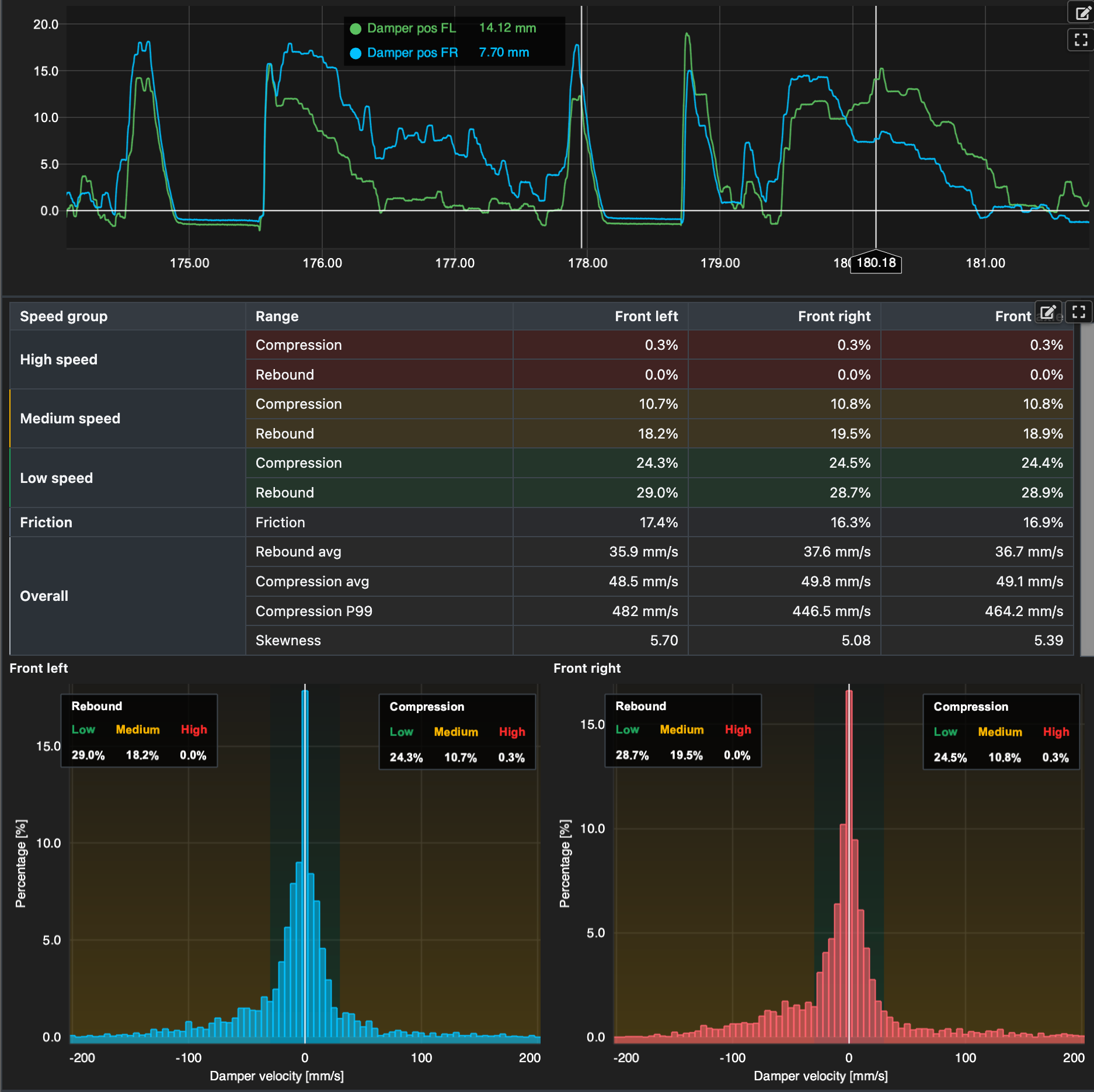
The idea behind the sensor is simple. According to TestLogger, damper position data shows which parts of the damper travel the car actually uses on track. That kind of information is very hard to judge by eye from the drivers' stand.
TestLogger Analyzer
Analyzer includes a damper histogram out of the box. It analyzes damper speeds within a single run.
TestLogger Manager
Manager looks at the longer term. Its long-term data reports use damper speed statistics to track damper condition across multiple runs, so racers can see when dampers start to degrade and need servicing. TestLogger's screenshots show a case where one damper failed, and the failure was clearly visible in the data report.
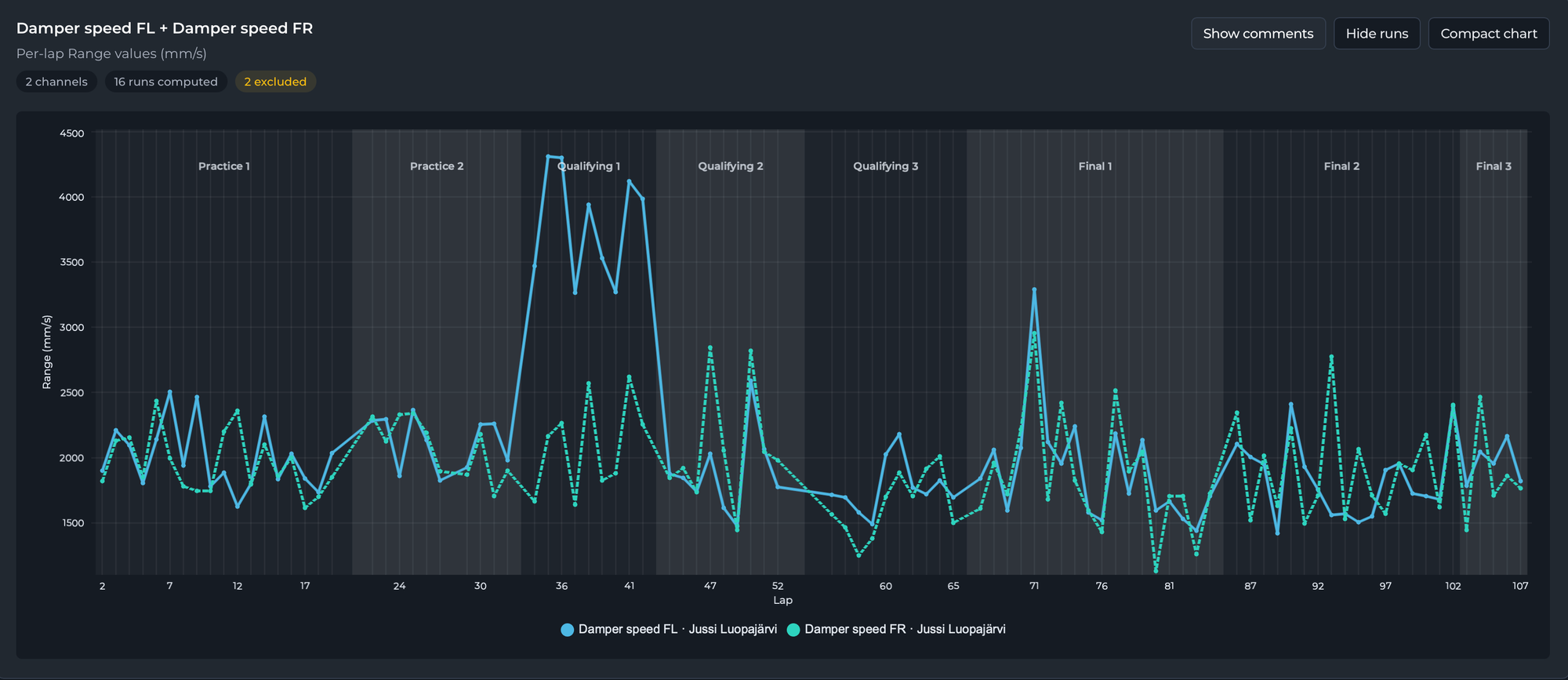
Over a long race weekend with practice, qualifiers and mains, that's the kind of view that could help you spot a shock that needs a rebuild.
Price and availability
The damper position sensor costs 40 euros (VAT 0%). TestLogger notes that the final price depends on each country's VAT rules.
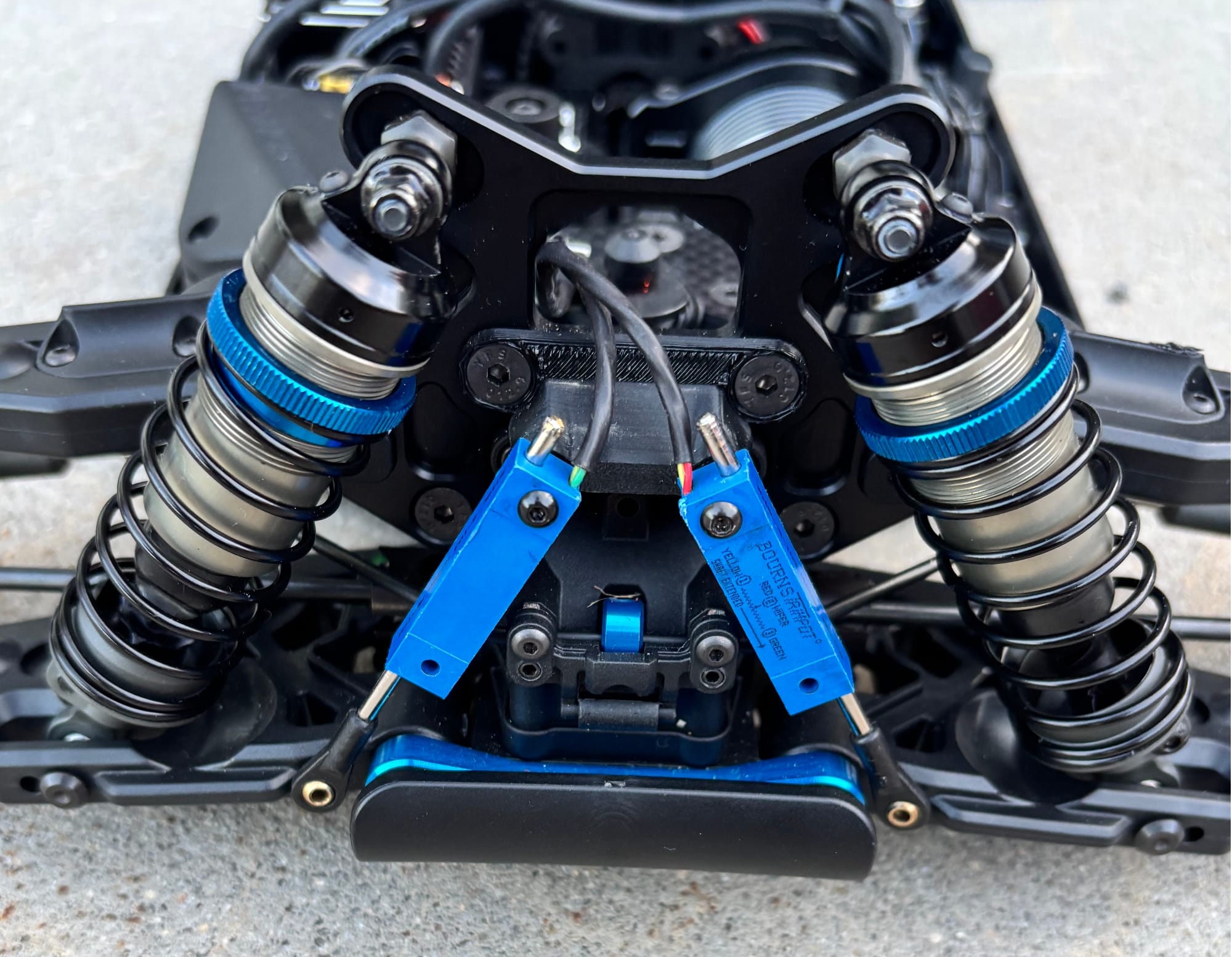
The package includes the cables and screws you need to install the sensor on a car with a Collector. Mounting brackets are not included. TestLogger says most installs need a simple car-specific bracket, like the one in the installation photo above.
The sensors are available now from the TestLogger store.
Read the full announcement in TestLogger's press release, and find the sensor at the TestLogger store.